Airborne Pollen and Its Impact on Allergies
Introduction
Pollen is a fine powder made and expelled by certain plants during pollination. Airborne pollen is carried by the wind and is a significant contributor to allergic reactions in many individuals, especially during spring and summer. Pollen grains, can trigger a range of allergic symptoms such as sneezing, nasal congestion, itchy eyes, and respiratory issues.
Understanding the sources, types, and seasonal patterns of pollen can help individuals manage their allergies more effectively. For example, most people with hay fever in Ireland are allergic to grass pollen – which is typically associated with summer allergies. However, about 25% of these individuals are also allergic to tree pollen, which occurs in the spring!
These allergies are on the rise with up to 30% of the current European population having some form of pollen allergy. While many of those who suffer from a pollen allergy (hay fever) see it as an inconvenience, the same cannot be said for those with underlying respiratory diseases. Ireland has the fourth highest rate of asthma in the world, and thus pollen represents a serious risk to the Irish public, as it can trigger and exacerbate asthma attacks.
Sources and trends of Allergenic Pollen
Pollen originates from various plants and can be classified into three major groups based on their source: tree, grass, and weed pollen. Each plant type releases pollen at different times of the year. In Ireland, common sources of allergenic pollen include:
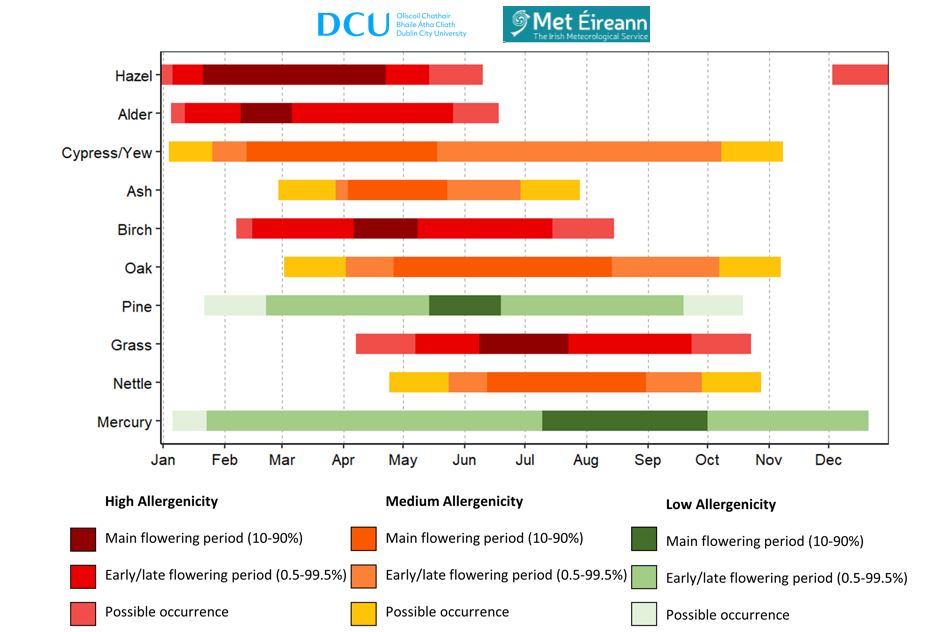
- Trees: Tree pollen is usually the first to appear in the spring. Hazel, alder, birch and oak are the primary tree pollen producers. Birch pollen in particular is highly allergenic and prevalent in the spring. Tree pollen is lightweight and can travel long distances, causing allergies across wide areas.
- Grasses: Grass pollen is the most common cause of hay fever in Ireland. Grass pollen season generally begins in late spring and extends into early summer. Ryegrass, Timothy grass, and Kentucky bluegrass are significant contributors, with peak pollen release occurring in late spring and early summer. Grasses can produce large amounts of pollen which can stay in the air for a long period of time.
- Weeds: Weed pollen tends to appear later in the year, from late summer to autumn. Common sources include ragweed, nettle, plantain, and mugwort, although ragweed is not currently a major issue in Ireland. Weed pollen can be particularly troublesome for allergy sufferers as it overlaps with the end of the grass pollen season.
Fungal Spores and Allergies
In addition to pollen, fungal spores are another significant source of airborne allergens. Fungal spores, produced by moulds and other fungi, are widespread and can be found both indoors and outdoors. Common allergenic fungi include Cladosporium, Aspergillus, and Alternaria. These spores can cause allergic reactions like those caused by pollen, including nasal congestion, sneezing, and respiratory issues.
Fungal spores are released throughout the year but tend to peak during the late summer and autumn, particularly in damp and humid conditions. Activities such as mowing the lawn, raking leaves, or being in areas with decaying plant material can increase exposure to fungal spores.
Pollen and Spore Monitoring in Ireland
An innovative automated pollen measurement instrument based on laser technology has been installed on the roof of Met Éireann HQ in Glasnevin, with more being deployed throughout the country. These devices count the number of pollen grains in the air continuously. This valuable information on pollen counts allows a Pollen Calendar to be constructed. By staying informed about pollen and spore levels, individuals can take preventive measures to reduce exposure and manage their symptoms.
Pollen Calendar
By measuring the pollen concentrations over multiple years, the trend of various pollen types can be seen to broadly repeat each year, with some deviations naturally because of weather patterns. This allowed for the creation of a Pollen Calendar with a particular focus on Dublin.
Predictive Pollen Forecast
By combining the recent measurements of pollen, recent weather observations, the forecast weather and the known pollen calendar, a prediction is made for the upcoming few days using a machine learning model. This is the forecast published on the Pollen Forecast page each day and made available from the regional forecast. The predictive capability of the forecast will be enhanced as more monitoring data becomes available.
Managing Pollen and Spore Allergies
Effective management of pollen and spore allergies involves a combination of strategies, with further information available from the HSE for management of hay fever and allergies in general.