Pollen Forecast
Forecast Issued: 18-09-25
Pollen Type: Low levels of Nettle particularly - see comments
| Region | Thursday | Friday | Saturday |
|---|---|---|---|
| 18-09-25 | 19-09-25 | 20-09-25 | |
| Leinster | L | L | L |
| Munster | L | L | L |
| Connacht | L | L | L |
| Ulster | L | L | L |
L = Low
M = Moderate
H = High
VH = Very high
N/A = Not available
General Comments:
Low levels of nettle and weed pollen expected during this humid period.
Tree Comments:
Low concentrations of tree pollen at this period. Most species have finished their season.
Grass Comments:
Low concentrations expected for grass pollen.
Weed Comments:
Low nettle and weed pollen levels expected.
Spore Comments:
Moderate levels of Cladosporium and Alternaria expected on the drier days with Ascospores and Basidiospores during the days of higher humidity.
© Dr. David O’Connor, School of Chemical Sciences, DCU
This pollen forecast is copyright protected. Reproduction of this on other websites or electronic media by any means whatever is prohibited. © Dr. David O’Connor, School of Chemical Sciences, DCU.
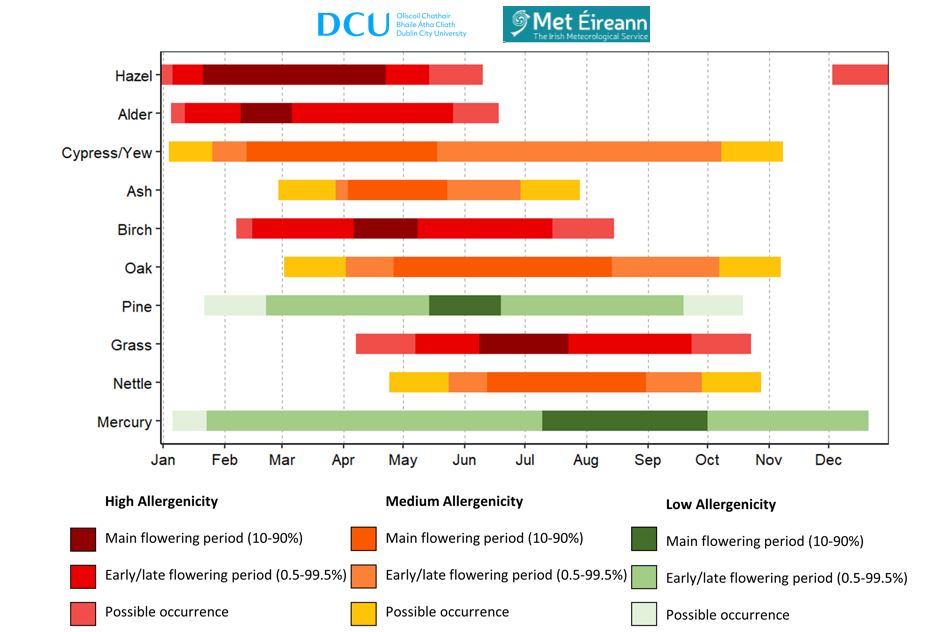
Shown below is a calendar depicting the general seasonal trends and allergenicity of the ten most prevalent pollen types for Dublin.